User Verification Interface Design 3D: Enhancing Clarity and Experience with Modern Minimalism
In the evolving digital landscape, user verification has become a critical component of online security and user experience. Whether it's confirming an account setup, validating a payment, or ensuring secure access to sensitive data, how this process is designed can significantly impact user satisfaction and trust. Enter User Verification Interface Design 3D—a modern approach that combines intuitive design with visually compelling 3D elements to make verification steps more engaging and easier to understand.
The Rise of 3D in User Interfaces
Three-dimensional (3D) design in user interfaces isn’t new, but its adoption has grown steadily as technology becomes more capable and users expect more from their digital experiences. The use of 3D icons, animations, and visual cues helps create depth and clarity in otherwise flat or text-heavy screens. This is especially relevant in the context of user verification, where confusion or hesitation can lead to drop-offs or errors.
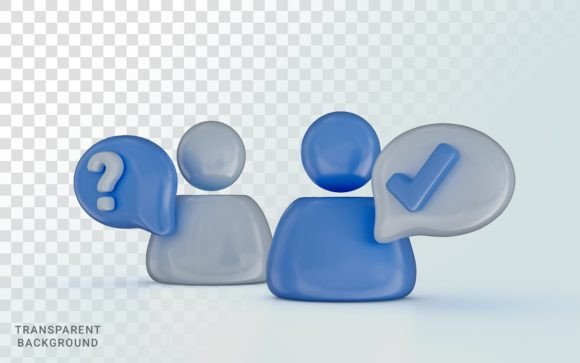
Take for instance the User Verification Interface Design Accepted and Confusion Confirm Asking Information 3D Render Icon. This specific icon serves as a visual prompt during multi-step verification processes, helping users quickly grasp whether they've made the right choice or need further clarification. Its minimalistic form ensures it doesn't overwhelm the interface while still being distinctive enough to draw attention at key decision points.
Why User Verification Interface Design 3D Matters Now
As businesses move increasingly online and mobile-first, the need for seamless and secure user interactions is paramount. Users today are more tech-savvy and have higher expectations for aesthetics and functionality. A well-designed verification interface not only reduces friction but also builds brand credibility through professionalism and ease of use.
Moreover, with the rise of remote work and digital onboarding, companies must ensure that their platforms are accessible and clear across all devices and screen sizes. 3D render icons, particularly those with transparent backgrounds, offer flexibility in integration and maintain consistency in branding without sacrificing clarity.
Evolution of Verification UIs: From Text to Visual Cues
In the early days of web design, user verification was often handled through simple checkboxes, text prompts, and buttons. While functional, these methods lacked engagement and could be ambiguous. Over time, designers began incorporating visual indicators like ticks, warnings, and progress bars to guide users through the process.
Now, the next step in this evolution is leveraging 3D design to enhance understanding and reduce cognitive load. For example, a 3D render icon showing a green checkmark rising in a subtle animation can signal confirmation more effectively than static text alone. Similarly, a question mark with a slight tilt or glow can indicate that more information is needed, prompting users to take action without feeling intrusive.
Practical Applications Across Platforms
User Verification Interface Design 3D is highly versatile and finds applications in various digital spaces:
- Landing Pages: Use 3D icons to highlight secure login or sign-up options, reinforcing trust and encouraging conversions.
- Mobile Apps: Incorporate animated 3D elements to guide users through onboarding or verification flows, improving retention and usability.
- Presentations: Add visual flair to slides discussing authentication systems or UX best practices with clean 3D graphics.
- Internal Dashboards: Help employees confirm actions such as document approvals or system updates using minimalist 3D prompts.
A transparent background in your PSD file allows for seamless placement of these icons into any project. Whether you're designing a sleek corporate app or a creative portfolio site, having high-quality 3D assets ensures your verification interface remains both professional and modern.
Minimalism Meets Functionality
One of the most appealing aspects of User Verification Interface Design 3D is its alignment with the current trend toward minimalism. Clean, uncluttered designs help users focus on the task at hand, and 3D elements can provide just the right amount of visual feedback without overcomplicating the layout.
Consider a scenario where a user needs to verify their email address before accessing an app. Instead of a generic "Confirm" button, you might include a 3D icon of a letter being stamped with a seal. This visual metaphor clearly communicates the action required and makes the process feel more tangible and trustworthy.
Such thoughtful design choices don't just look good—they perform better too. Studies show that users interact more positively with interfaces that provide immediate and clear feedback. A well-placed 3D icon can serve as that feedback, reducing confusion and increasing efficiency.
Designing for Accessibility and Inclusivity
When working with User Verification Interface Design 3D, it’s essential to consider accessibility. Not every user perceives visual cues the same way, so it's important to pair 3D icons with appropriate text labels and alternative content descriptions. This ensures that everyone, including those using screen readers or experiencing color blindness, can navigate your verification process smoothly.
Minimalist 3D icons are particularly useful here because they tend to avoid excessive detail or color dependency. A simple, bold shape with subtle lighting effects can often convey meaning more universally than complex illustrations or text-only solutions.
How to Choose the Right 3D Icons for Your Project
When selecting 3D icons for your verification interface, consider the following factors:
- Relevance: Does the icon clearly represent the action or state it’s meant to signify? Avoid ambiguity by choosing familiar symbols like checks, locks, or arrows.
- Consistency: Ensure the style of your 3D icons matches the overall aesthetic of your project. A cohesive visual language enhances user experience and brand identity.
- Scalability: Opt for high-resolution PSD files that allow for easy resizing and adaptation across different platforms and screen sizes.
- Performance: Keep file sizes optimized to prevent delays in loading times, especially for mobile users.
For example, if you’re designing a landing page for a financial service, using a 3D render icon of a shield with a glowing border can instantly communicate security and verification. The transparency of the background lets the icon blend naturally with your page’s color scheme, maintaining visual harmony.
Real-World Examples of Effective 3D Verification UIs
Several leading brands have already adopted 3D verification interfaces to improve their user experience:
- E-commerce Platforms: Many sites now use 3D icons to indicate successful payments or shipping confirmations, making the process feel more interactive and reassuring.
- SaaS Tools: Cloud-based software often employs 3D visuals in onboarding sequences to help users understand complex verification steps.
- Banking Apps: These apps frequently integrate 3D elements into two-factor authentication screens to guide users securely through each step.
These implementations show that when done right, User Verification Interface Design 3D can significantly enhance user confidence and streamline workflows. It’s not just about looking modern—it's about communicating effectively in a world where users demand both beauty and utility.
Getting Started with Your Own 3D Verification Interface
If you're a designer or developer aiming to elevate your next project, here are some practical tips:
- Use vector-based tools to create or edit 3D icons, ensuring scalability and crisp rendering on all devices.
- Download ready-made 3D icons from trusted design marketplaces to speed up development while maintaining quality.
- Test your verification flow with real users to see how the 3D elements affect their understanding and interaction.
- Keep your color palette consistent to maintain visual coherence across the entire interface.
Remember, the goal of User Verification Interface Design 3D is to support the user, not distract them. A minimalist approach with purposeful 3D elements can achieve that balance perfectly.
Making Your Next Project Unique with 3D Icons
To stand out in a crowded digital space, uniqueness matters. While many platforms rely on standard UI components, adding custom 3D icons can give your project a fresh, modern edge. Whether you're launching a new website, redesigning an app, or creating a presentation, these icons can serve as subtle yet powerful design statements.
Imagine presenting a case study on user onboarding. A slide featuring a 3D render icon of a person checking off a task list will immediately grab attention and convey the message of completion and success. Or picture a dashboard where each verification step is marked by a small 3D graphic, guiding the user intuitively through the process.
With transparent backgrounds and layered PSD files, integrating these icons into your workflow is straightforward. You can adjust colors, scale, and positioning to match your project’s requirements, giving you full creative control without the need for advanced 3D modeling skills.
Future-Proofing Your Designs with 3D Elements
As AR (Augmented Reality) and VR (Virtual Reality) continue to influence UI/UX trends, the role of 3D design in everyday interfaces will likely expand. Starting now with 3D verification icons positions your project ahead of the curve, allowing for smoother transitions into more immersive design paradigms in the future.
Additionally, 3D assets are becoming more standardized across design ecosystems. Tools like Figma, Sketch, and Adobe XD now support 3D layers and animations more robustly, making it easier than ever to implement these elements professionally.
Conclusion
User Verification Interface Design 3D is more than a passing trend—it's a strategic enhancement to user experience and brand perception. By using realistic, minimalistic 3D render icons with transparent backgrounds, you can create interfaces that are not only functional but also visually aligned with modern expectations.
Whether you're a seasoned professional or a creative just starting out, investing in high-quality 3D design assets can make your projects more engaging, intuitive, and memorable. As we continue to shift toward more visual and immersive digital experiences, staying ahead with thoughtful User Verification Interface Design 3D is a smart move for anyone serious about design excellence and user satisfaction.